
Our Team
We work artfully and with intention to cultivate a racially-just conservation, climate, and environmental movement though empowered leadership and community care.


Seeding and Rooting Circles
Root to Flourish Collective’s Seeding and Rooting Circles provide strategic guidance, creative visioning, valuable expertise, and deep connections to conservation, climate, and environmental movement communities.
Seeding Circle

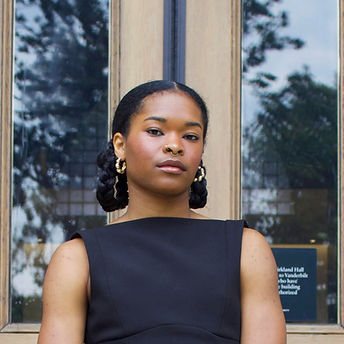
Chanté Coleman is the Deputy Director of California ChangeLawyers, where she furthers the organization’s bold vision of a fully inclusive democracy. She leads the implementation of the 2024–2026 Strategic Directions, and through advocacy, movement lawyering, and the empowerment of the next generation of legal changemakers, she drives lasting, positive change for all Californians. Chanté brings a decade of experience in environmental justice, systems change, and coalition-building to her new role in the legal sector. Previously, she served as Senior Vice President of Equity and Justice at the National Wildlife Federation, where she spearheaded institutional culture change and embedded equity across one of the country’s largest conservation organizations. She also led the Choose Clean Water Coalition, building a 230-member network into a regional force for equitable policy and watershed protection. A nationally recognized voice on justice-centered leadership, Chanté is a member of the Green Leadership Trust, a 2017 Environmental Leadership Program Fellow, and a 2020 Better Selves Fellow. She was named a “Rising Star” by Green 2.0, a 2024 Social Impact Woman to Watch by Nonprofit HR, and is a 2020 and 2023 finalist for the Rachel’s Network Catalyst Award. In 2024, California Western School of Law honored her with the Distinguished Alumni Award. And in 2025, she received San Diego Magazine’s Pioneer Award in the Law + Legal category. She holds degrees from Princeton University and California Western School of Law, and lives in San Diego, where she centers joy, rest, and wellness as acts of resistance and resilience.

Dr. Rene Henery is a deep ecologist, artist, writer, and speaker based in Northern California. His work embraces water, diversity, reconciliation, and equity as pathways to resilient ecosystems, coherent communities, and a personal experience of belonging. Rene holds a joint position as California Science Director for Trout Unlimited, the US’s oldest and largest Salmon conservation organization, and research faculty for the University of Nevada, Reno, Global Water Center. Over the last decade, Rene’s work in the western US has focused on cultivating spaces for collaborative engagement around freshwater systems and the diverse life and communities that they connect. He works extensively in California’s Central Valley on the science and policy of river and floodplain restoration and in the Sierras and Cascades on the restoration of mountain meadows. Rene is a member of the Water Solutions Network and a co-founder of both the Central Valley Salmon Habitat Partnership and the Sierra Meadows Partnership. Rene’s work outside the US includes United for Lake Atitlán (Unidos por Lago Atitlán), a multi-national effort to build capacity for the long-term health and resilience of Guatemala’s Lake Atitlan Watershed, and participation in the conservation of Mongolia’s Eg River and its population of Hucho Taimen, the world’s largest salmon. Common to all of Rene’s work is an orientation towards systemic health and healing, and the application of science and emergent strategy to support a transition from oppositional politics and polarization to coherence and connection.

Juan D. Martinez is Deputy Director, Fresh Tracks, at the Aspen Institute Forum for Community Solutions. He is a co-founder of Fresh Tracks, a youth-led cross cultural revolution, rooted in the healing power of the outdoors, as well as implementing the tribal and indigenous community of practice for the Opportunity Youth Forum. His work has helped to grow the silo-breaking strategy for systems change and youth power building while also lifting up successful stories of civic engagement and community organizing. Juan has over 15 years of nonprofit management and implementation of strategy and was named a National Geographic Explorer in 2011 for his work to engage the rising generation of youth to the healing power of the outdoors. Juan also serves on The Wilderness Society’s governing council, is a TED Speaker and author, and is dedicated to bringing the power of equity and justice to life through youth and community-driven solutions. Juan has committed to help empower the next generation of leaders dedicated to addressing systems of inequity and access to opportunities by working with community leaders, non-profits, and businesses across the country. Juan resides in Springfield, Illinois, with his wife, Vanessa.

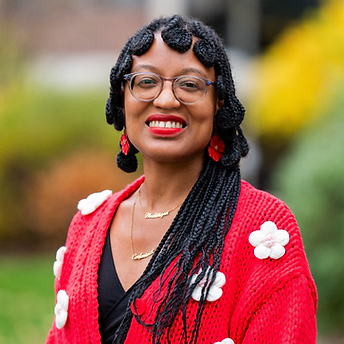
Jacqueline “Jackie” McGhee-Rutledge is the Director of Workforce Development at The Corps Network, where she focuses on expanding national workforce initiatives, strategic partnerships, post-placement employment pathways, Apprenticeships, and federal workforce project funding. With over two decades of expertise in organizational design, strategic planning, workforce development, and program and project management, Jackie has a successful track record in leading government workforce programs and managing contracts and grants for organizations like the Department of Labor (DOL) and the Department of Housing and Urban Development (HUD). She builds cross-functional teams, optimizes performance improvement measures, and leads organizational change initiatives. Her passion lies in connecting underserved marginalized populations with equitable access to career pathways higher education, and addressing Social Determinants of Health. In addition to her previous leadership roles, Jackie has extensive experience in strategic consultancy, contributing to federal projects with the U.S. Department of Justice (DOJ), the Department of Labor (DOL), and the U.S. Department of Education (ED.) in which her responsibilities encompassed federal proposal development, apprenticeship implementation, guiding national program development initiatives, informing green jobs research, and federal project grant management. Jacqueline holds a Master of Education in Adult Learning and Workforce Education, a Master of Science in Management, and a Bachelor of Arts in Marketing. She is a Certified Workforce Development Professional, Certified Process Improvement Manager, Certified Diversity, Equity, and Inclusion in the Workplace Manager, and Certified Change Management Professional. She also holds various other certifications in project management, Lean Six Sigma, and professional and organizational development. Jackie has dedicated her life to increasing access to equitable opportunities through workforce and education. She has served as an educational adjunct instructor in business and career development and led several local workforce initiatives in her hometown of Louisville, Kentucky, where she lives with her husband, Thoris, of 15 years, and three children, Avery, Eva, and Kailyn.
Rooting Circle
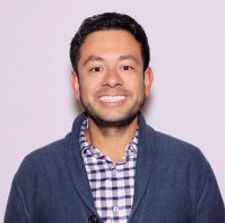
Albert Arévalo is an environmental justice and sustainability professional dedicated to connecting communities with nature. He leads conservation and youth engagement programs, partners with organizations like Rock Creek Conservancy, GRID Alternatives, Latino Outdoors, and drives data-informed sustainability initiatives for Prince George's Parks and Recreation. Albert combines his passion for environmental stewardship with strategic leadership to create equitable access to green spaces and foster community empowerment. Albert holds an M.A. in Sociology from New Mexico State University and a B.A. in Sociology from Texas State University, and he brings a data-driven approach to analyzing environmental metrics and advancing equitable solutions. Fluent in Spanish and deeply committed to community-centered work, he combines his passion for nature with strategic leadership to create meaningful impact.

Sofia Barboza is the Ocean Program Manager at the Hispanic Access Foundation where she leads the organization’s marine and coastal initiatives. Her work spans ocean advocacy, community-based ocean literacy projects, developing research whitepapers and other educational resources, and overseeing documentary film production. Her work strives to ensure that Latino communities in the U.S. are informed, represented, and actively engaged in national ocean conservation efforts. She holds a Master’s degree in Climate and Society from Columbia University’s Climate School, where she focused on climate dynamics, climate change and variability, and their societal impacts. She also holds a B.A in Anthropology with a focus on Latin American Studies from the University of Pittsburgh. Trilingual in English, Spanish, and Portuguese, Sofia integrates her backgrounds in both the humanities and sciences to advance solutions at the ocean-climate nexus. Before joining the Hispanic Access Foundation in 2024, Sofia worked in the ocean nonprofit sector, where she was involved in ocean conservation grantmaking, policy initiatives, and leading international events—including the 2022 United Nations Ocean Conference Youth & Innovation Forum and the 2023 Our Ocean Youth Leadership Summit. She also served as a teaching assistant at Columbia for a graduate Water Resources course and was a Fulbright Scholar in Brazil prior to graduate school. Sofia is proud to also be an Advisory Committee Member for the Frontline Resource Institute, an initiative supported by the Environmental Defense Fund which provides resources to communities that experience and struggle against the first and worst impacts of environmental harms and climate change.

Jasmine Guevara (she/ella) is currently the Operations Coordinator at the Conservation Alliance for Seafood Solutions (CASS), a global coalition of NGOs and companies working to make the seafood sector more environmentally and socially responsible. She provides operations, communications, events, and “whatever-else-is-needed” support to grow the community and convene its more than 200 members. Before CASS, Jasmine worked across a wide range of nonprofits and roles, from grantmaking and development to a five-year stint in concert operations. She interned with the Monterey Bay Aquarium in college and, after years of trying to break into the environmental sector, found a bridge into it as a Green 2.0 fellow. She has degrees in International Development and Political Science from the University of California, Los Angeles, and is based in San Diego, CA.
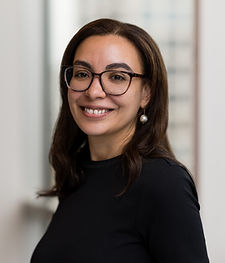
Yianice Hernandez is the Deputy Managing Director at the Freedom Together Foundation, which supports people who have been denied power to build it, so they can change unjust systems and create a more democratic, inclusive, and sustainable society. With over twenty years of experience in social justice philanthropy, community development, and systems change, she is dedicated to advancing equity at the intersection of climate justice, public health, and community-led solutions. Previously, Yianice served as a Senior Program Officer for the Environment Program at The JPB Foundation, where she worked to promote a just and equitable clean energy future. Her career includes leadership roles within New York City government. As Director of Capital Planning for the NYC Housing Authority, she managed capital investments to provide safe, sustainable housing. Later, as Director of Healthy Living by Design at the NYC Department of Health, she led citywide initiatives to create built environments that support the well-being of individuals, families, and neighborhoods. Additionally, Yianice spent a decade at Enterprise Community Partners, where she directed national efforts to advance green affordable housing practices and research. She holds a bachelor's degree in sociology from Pace University and a master's degree in nonprofit administration from the University of Notre Dame.
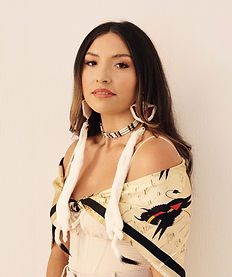
Savannah Romero (Eastern Shoshone) is a narrative and cultural strategist, fiction writer, film producer, and Co-Founder of The BLIS Collective (Black Liberation Indigenous Sovereignty)—a solidarity and action hub that braids stories and strengthens movements for Black and Indigenous futures. She currently serves as Chief Strategy and Innovation Officer at Old Growth Solutions, a Native woman-owned firm dedicated to advancing systems change, storytelling, and enterprise development that supports the health of land, people, and future generations. Savannah has previously held leadership roles at Tahoma Peak Solutions, IllumiNative, The National Indian Education Association, and the U.S. House of Representatives, where she worked across movement building, policy, and strategic communications. She holds a BA from the University of Washington, a Master’s in Public Policy from New York University, and an MFA in Creative Writing from the Institute of American Indian Arts.
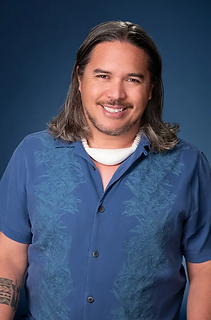
Angelo Villagomez is a senior fellow at American Progress, where he focuses on Indigenous-led conservation. Born in a village on an island in the western Pacific Ocean next to the Mariana Trench and trained in Western scientific methods, Villagomez is a conservation advocate who uses Indigenous knowledge and values and the scientific method to address modern threats including habitat loss, fishing, and climate colonialism. Villagomez worked for 14 years at The Pew Charitable Trusts, where he was an advocate for the designation and expansion of the national marine monuments in the Pacific islands and a policy expert on global shark conservation. During his tenure at Pew, he led efforts to secure an agreement at the International Union for Conservation of Nature committing governments to protect at least 30 percent of the ocean in fully to highly protected marine areas and contributed to The MPA Guide and the IUCN MPA Standards. He previously worked for the League of Conservation Voters, the Smithsonian Institution, and the Mariana Islands Nature Alliance. Villagomez holds bachelor’s degrees in biology from the University of Richmond and environmental policy from Rollins College. He is a mediocre ukulele player and enjoys scuba diving in warm tropical waters full of fish.
Supporters, Partners & Coalitions

America The Beautiful for All Coalition

Environmental Capacity Builders Network


Water Equity and Climate Resilience Caucus (WECR)

Our Values
Human-Centered
Attend to human needs and desires through the development and implementation of diversity pathways. Ensure success by providing resources and evaluating emotional, relational, and practical impact.
Relationship Dynamics & Measuring Those
Value and measure relationships equally with tactical outcomes. Invest in long-lasting connections and support relationship-building in funding.
Cogeneration/Co-creation
Engage diverse voices equally in co-creating and valuing ideas within a regenerative system.
Boundary Spanning
Break down silos to address systemic issues like climate change and racial injustice, promoting learning and transformation across issues.
Community
Foster true belonging with support, multi-generational relationships, and a professional home, even in virtual settings.
Building Power and Agency, Not Assimilation or Conversion
Construct a new way where everyone brings their full selves, has the power to build new paths, and contributes to a just and equitable system.
Lifting Up vs. Sacrificing
Celebrate and support communities often systemically marginalized, ensuring they have resources and agency to act independently.
Ambition
Pursue sustainable, evolving innovation focused on equity and addressing injustice. Aim for a trauma-informed, regenerative environment where all leadership is valued.
Experts in Equitable Measure
Respect and value everyone’s expertise. Engage equitable approaches for shared power in all interactions.